
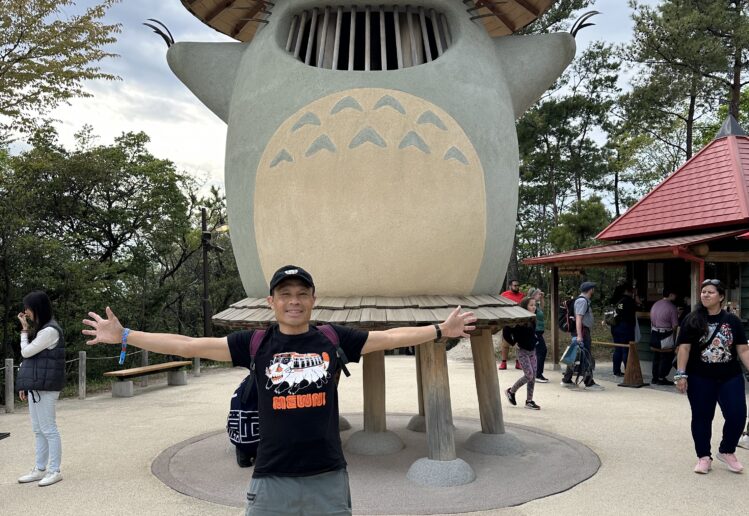
About a week ago, I had the opportunity to visit Ghibli Park in Aichi Prefecture, Japan. I could write a lot about the park, but what sticks with me most is what the experience was like without a smartphone. Because cameras and smartphones are prohibited to use in most of the park.
The management does not explain why they don’t allow photos or videos. I imagine it’s to promote exploration and discovery instead of documentation and social sharing. It might be a crowd control thing, since people would spend a lot more time in a lot of the spaces if they could take pictures and videos everywhere.
But the upshot was that for most of the time I was there, my smartphone stayed in my pocket. And honestly it made the whole thing 100x better.
Being freed of the need to record everything we experienced opened us up to just being present and fully engaged with the various spaces. It’s one thing to see a recreation of Mei’s house from “My Neighbor Totoro” or the castle from “Howl’s Moving Castle.” It’s a totally different thing to leaf through old books, smell dried herbs, and touch a child’s sweater.
Everything feels lived in and real. Kitchens are messy, desks are cluttered, closets are crammed with worn clothing and linens. And you are encouraged to interact with everything you see. You feel almost embarrassed to be invading the privacy of these fictional characters. Visitors are quiet, hushed, reverent.
My partner and I gasped with each new discovery, our senses fully engaged. Which I guess is my main takeaway — digital devices, as powerful as they are, only represent one way of understanding and connecting to the world. Embodied, real world experiences that include touch, smell, taste, and movement are so much richer and more impactful. And we can’t full enter them if we are attached to our devices.
As a digital creator and educator, I felt so moved by this very analog experience.
That’s really interesting. It’s amazing how much more present you feel when you’re not constantly distracted by your phone.
Exactly! I love being untethered from my device and just experiencing a thing.